
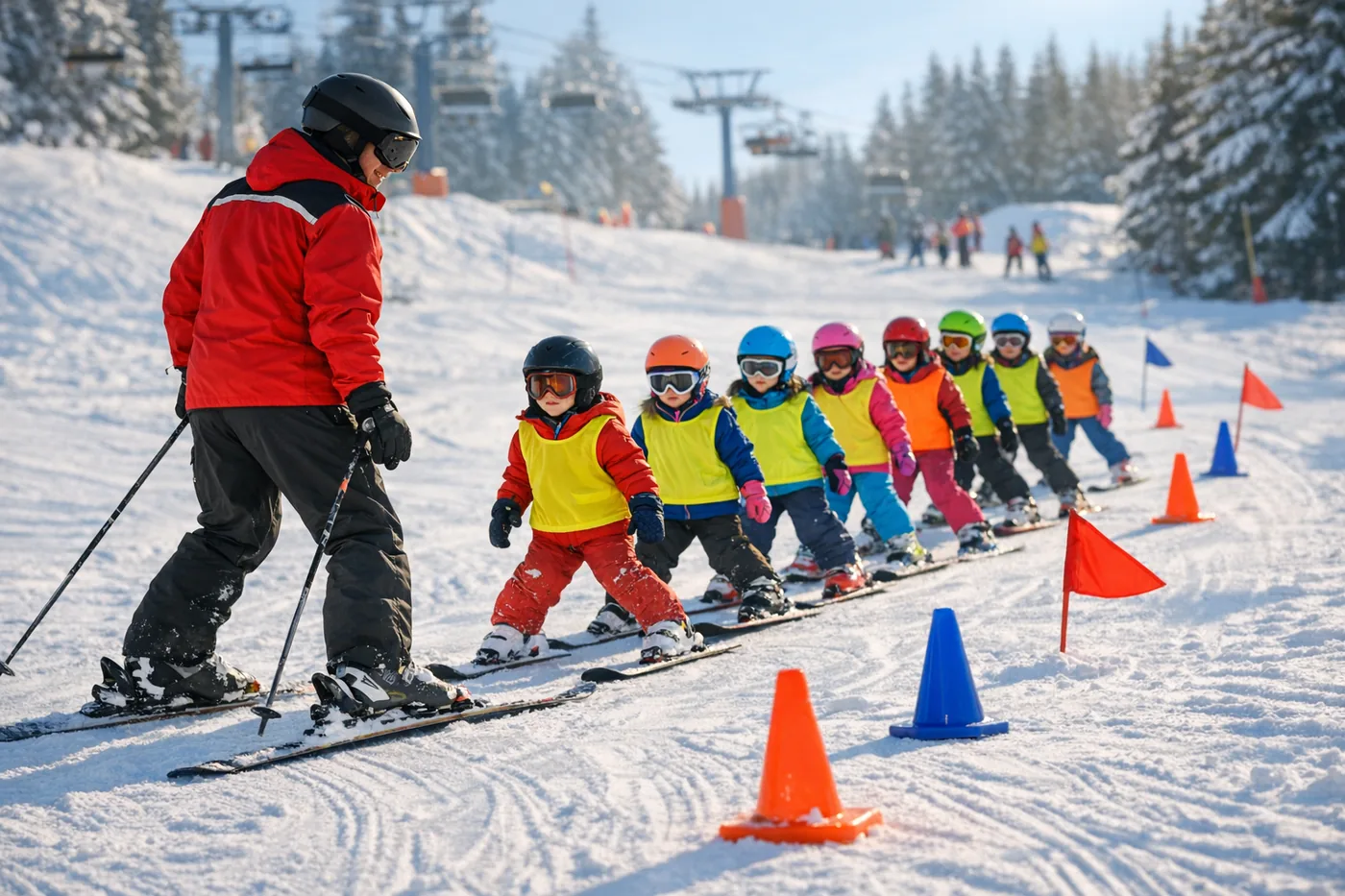
Heading on a skiing holiday for the first time? Choose a beginner-friendly resort such as Rauris, Lofer, Wagrain or Maria Alm, book ski school at the same time as your accommodation and hire all your equipment locally. After three days of ski school, most people manage to ski down easy blue runs, and after a week you'll have a solid foundation.
Accommodation with the lift pass included at 108 ski resorts in the Alps. You arrange your own travel there by car, train or plane.
Choose a beginner-friendly resort
The most important decision for a successful first skiing holiday is choosing the resort. As a beginner you don't need hundreds of kilometres of pistes, you need wide, gentle slopes, a good practice area and a ski school with patient instructors. Here are our top picks:
Rauris has been voted Austria's best beginner slope, a long, wide and gentle piste where new skiers get perfect conditions. This peaceful former gold mining village in Salzburgerland has 33 km of pistes, short queues and low prices.
Lofer is a charming family resort with 46 km of pistes, where the wide blue runs in the lower part of the valley make it one of Austria's best resorts for beginners. Prices are among the lowest in the Alps.
Wagrain has clearly marked beginner areas by the valley station and a ski school known for its high quality. Once your technique is in place, you'll have the whole of Snow Space Salzburg to grow into.
Maria Alm has its own practice area at the base where you can train at your own pace, and ski instructors used to British guests. The resort gives access to Hochkönig's 120 km of pistes.
Flachau suits you if you're travelling with a mixed group: good beginner areas by the valley station, while the more experienced members of the group have 760 km of pistes in Ski amadé to explore.
Book ski school straight away
Ski school is the best investment you can make as a beginner. An instructor teaches you the right technique from the start, which makes skiing both more enjoyable and safer. Learning on your own, or from an impatient friend, takes longer and often leads to bad habits.
Group lessons for adult beginners normally cost 120 to 200 euros for a five day week with 2 to 3 hours of tuition per day. That's plenty: after three days most people manage easy blue runs, and after a week you'll have a solid foundation for skiing independently.
Private lessons cost 60 to 100 euros per hour and give the fastest progress, a good option if you want to get going during a long weekend.
Book in advance. Book ski school at the same time as your accommodation, especially during half term when groups fill up. Most resorts let you add ski school when you book.
Hire your equipment locally
Don't buy equipment for your first skiing holiday. Every resort has ski hire shops where you'll get skis, boots and poles fitted to your height, weight and level. A week's ski hire normally costs 100 to 180 euros for adults, with beginner equipment at the lower end of this range.
Also hire a helmet if you don't have your own, it costs around 5 to 10 euros per day. A helmet is strongly recommended for everyone and is compulsory for children in Austria.
It's often worth booking your ski hire online in advance, as it's usually cheaper than arranging it at the shop on arrival.
Packing list for your first skiing holiday
Your clothing determines how much fun you have on the slopes. The basic principle is layering:
- Base layer in wool or synthetic material next to the skin, never cotton, which turns cold when damp.
- Mid layer such as fleece or a thin down jacket for insulation.
- Ski jacket and salopettes that are wind and waterproof.
- Ski socks in wool or synthetic material, one pair per day.
- Mittens or gloves, ideally an extra pair in your rucksack.
- Ski goggles and sunglasses, weather changes quickly in the mountains.
- Sunscreen with a high UV factor and lip balm, the sun is strong at altitude, even when it's overcast.
- Hat or helmet liner for breaks and evenings.
You can often borrow or buy second hand ski clothing for a first trip, and wait on expensive purchases until you know skiing is for you.
Common beginner mistakes to avoid
- Skipping ski school. The most common mistake. Getting the right technique from the start makes the whole week more enjoyable.
- Choosing a run that's too difficult too soon. Stick to green and blue runs for the first few days. Colours indicate difficulty: green is easiest, followed by blue, red and black.
- Skiing for too long each day. Skiing is physically demanding on untrained muscles, and most accidents happen in the afternoon when legs are tired. Half days are plenty to start with.
- Cotton clothing. Cotton becomes damp and cold. Base layers in wool or synthetic material make a huge difference.
- Forgetting sunscreen. The sun at altitude burns quickly, even through clouds.
- Choosing a party resort. Resorts like Ischgl and St. Anton are fantastic, but as a beginner you'll get more for your money in a quiet resort with wide practice slopes.
Book your first skiing holiday
Accommodation with the lift pass included in the price makes your first trip easy. You can add ski school and equipment hire when you book.
See accommodation and pricesCommon questions before your first skiing holiday
Rauris in Salzburgerland has been voted Austria's best beginner slope, a long, wide and gentle piste with perfect conditions for new skiers. Lofer, Wagrain and Maria Alm are also excellent choices with wide, gentle runs, dedicated practice areas and good ski schools.
The vast majority of beginners manage, after 3 days of group ski school, to ski down easy blue runs with controlled turns. A full week of ski school gives a solid foundation for skiing independently on blue and easier red runs. Children often learn faster than adults.
Group ski school for adult beginners normally costs 120 to 200 euros for a week of five days with 2 to 3 hours of tuition per day. Private lessons cost 60 to 100 euros per hour and give faster progress. Always book in advance, as groups fill up in high season.
Hire your equipment locally. A week's ski hire normally costs 100 to 180 euros for adults, and the hire shop will help you choose the right skis and set the bindings according to your weight and level. Buying your own equipment only pays off once you know you'll be skiing regularly.
Runs are marked according to difficulty: green is flattest and easiest, blue is easy, red is intermediate and black is difficult and steep. As a beginner, start on green and blue runs. After a week of ski school, most people manage easier red runs.