
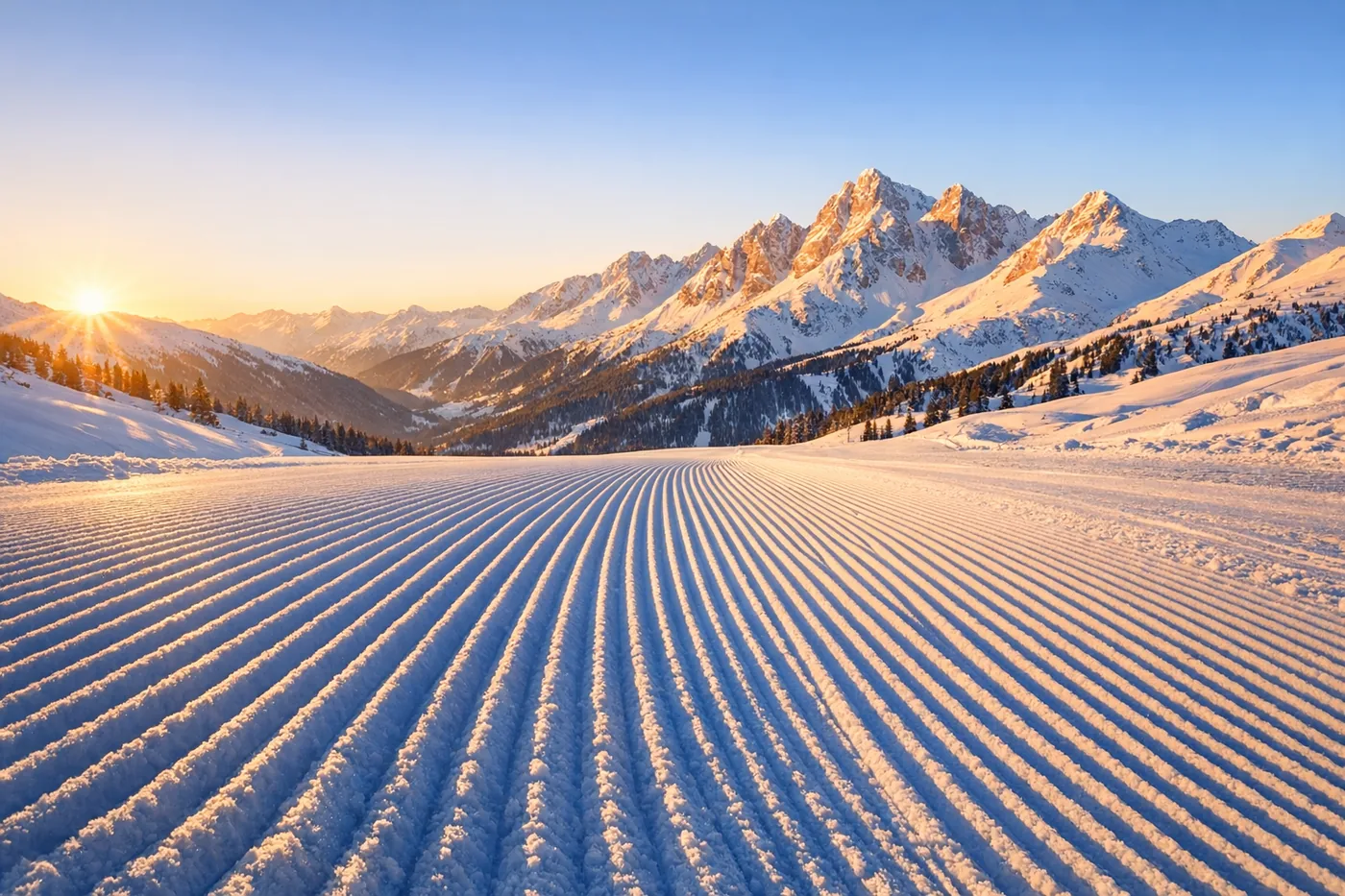
Book your ski holiday in summer, or by September at the latest, if you are travelling over New Year or half term. That way you get the widest choice and often 10 to 20 per cent in early booking discounts. For New Year week, aim for June or July. If you are travelling an ordinary week in January or March, you can wait longer, and if you are flexible, last-minute deals can offer discounts of up to 40 per cent.
Accommodation with the lift pass included at 108 ski resorts in the Alps. You arrange your own travel there by car, train or plane.
Booking time by period
How early you need to book depends entirely on when you want to travel. The more sought-after the week, the faster the accommodation sells out. Here is an overview:
| Travel period | Book by | Price level |
|---|---|---|
| New Year week | June to July | The most expensive of the season |
| Half term | Summer, September at the latest | Peak season, sells out first |
| Easter week | Before Christmas | Mid-price, cheaper than half term |
| Ordinary January week | A couple of months ahead | Good value, good snow |
| March and April | A couple of months ahead | Cheapest, choose a high-altitude resort |
Half term is by far the most booked period for ski holidays, and popular accommodation sells out as early as autumn. The weeks when most people are on holiday at the same time are the most sought-after of all.
Why it pays to book early
Booking early has three major advantages. Firstly, early booking discounts of 10 to 20 per cent are often available during summer and early autumn. Secondly, you get a free choice of hotels and apartments instead of taking whatever is left. Thirdly, it is easiest to arrange the whole stay, including lift pass and half board, when the choice is at its widest.
This applies particularly if you are travelling with family and need a family room, or if you want to stay close to the lift. The best locations go first.
Last minute: for the flexible traveller
The opposite of early booking also works. Accommodation that has not sold out is offered at substantial discounts, sometimes up to 40 per cent below the standard price. This strategy requires you to be able to travel at short notice and be open to different resorts and dates.
Last minute works best in the low season weeks of January and March. During half term and New Year, however, the choice is very limited. Cancellations do occur, but do not count on them.
Keep an eye out for cheap ski holidays and last-minute deals.
Snow reliability: think about altitude early and late in the season
If you travel in the depths of winter, January and February, snow cover is good throughout the Alps. But if you book early season (November and December) or late season (April), you should choose a resort based on altitude. The rule is simple: the higher the ski area, the more reliable the snow.
Snow-reliable choices for early and late season:
- Obergurgl: village at 1 930 metres and skiing up to 3 080 metres, Austria's most snow-reliable resort with a season from November to May.
- Obertauern: village at 1 740 metres, known as "Austria's snow bowl" thanks to its favourable microclimate.
- Zell am See: the Kitzsteinhorn glacier at 3 029 metres has reliable snow, whatever time of season you travel.
- Ischgl: skiing between 1 377 and 2 872 metres, normally open until early May.
You will find more options among our high-altitude ski resorts.
Ready to book?
Compare stays with hotel and lift pass included in the price. Book early for the best price and widest choice.
See accommodation and pricesFrequently asked questions about booking a ski holiday
Ideally book in summer, or by September at the latest, if you are travelling over Christmas, New Year or half term. That is when the choice is greatest and prices are lowest, often with early booking discounts of 10 to 20 per cent. For low season weeks in January and March, it is usually enough to book a couple of months ahead.
Book as early as June or July. New Year week is one of the season's most sought-after periods, and popular resorts such as Ischgl and St. Anton can be fully booked as early as September.
The cheapest weeks are late November and early December, as well as late March and April. An ordinary January week after the New Year weekend is also good value. New Year week and half term weeks are the most expensive.
Yes, unsold accommodation can be sold with discounts of up to 40 per cent. This requires flexibility with both resort and dates. During half term and New Year, however, the choice of last-minute accommodation is very limited, and early booking is nearly always better.
January and February normally have the coldest temperatures and the best snow throughout the Alps. Early in the season (November and December) and late (April), you should choose a high-altitude resort such as Obergurgl, Obertauern or Zell am See with the Kitzsteinhorn glacier, where snow reliability is good even outside peak winter.